2026-11-23 ·
How Winter Storms Affect Sewer Lines in the Inland Empire
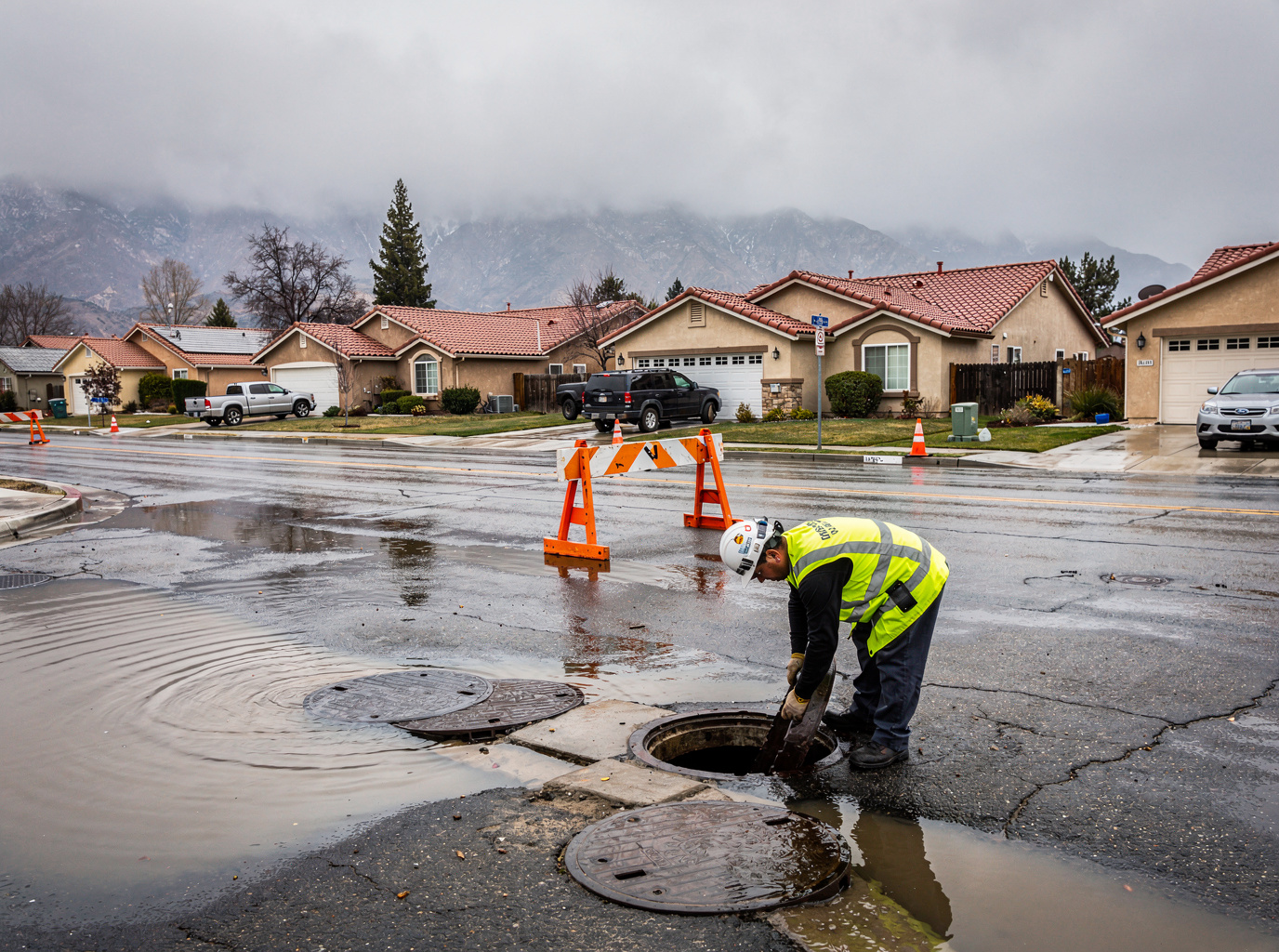
Winter storms raise the risk of main sewer line backups and collapses across Rancho Cucamonga by saturating clay-heavy soils that shift and press against aging pipes in neighborhoods such as Etiwanda, Terra Vista, and Victoria.
Soil Saturation from Heavy Rain
Rancho Cucamonga’s hot-summer Mediterranean climate brings most of its annual rainfall between December and March, often in short, intense storms. When several inches fall in a week, the ground in South Rancho Cucamonga and North Rancho Cucamonga holds water longer because of the dense clay subsoil. This added weight and moisture cause the soil to expand and contract, placing lateral pressure on sewer lines that were installed 30 to 50 years ago. In areas near Central Park and Victoria Gardens, older 4-inch clay pipes are especially vulnerable because joints separate under the movement. Homeowners notice slow drains or gurgling toilets first during these wet periods, signs that the line has already shifted.
Root Intrusion Spikes After Storms
Rain softens compacted soil around tree roots near the Rancho Cucamonga Epicenter and in Downtown Rancho Cucamonga, allowing roots to grow faster toward the moisture inside sewer pipes. Once roots enter through small cracks, the next storm’s extra flow carries debris that catches on the roots and creates a blockage within days. Properties in Terra Vista and Etiwanda with mature ficus or pepper trees see this pattern every winter. A sewer camera inspection after the first heavy rain can locate these intrusions before they cause a full backup into the home.
How Pipe Material and Age Respond
Many homes built before 1980 in Victoria and North Rancho Cucamonga still have clay or cast-iron mains that become brittle when repeatedly wetted and dried. Stormwater infiltration through open joints adds hydraulic pressure that older pipes were never designed to handle. In contrast, newer sections of South Rancho Cucamonga with PVC lines fare better but can still suffer joint separation where the trench was poorly compacted. When a line fails during a storm, the repair window is short because saturated yards limit equipment access until the ground firms up.
Choosing Trenchless Repairs in Wet Conditions
Trenchless methods such as trenchless sewer line replacement and main sewer line replacement allow crews to work from existing access points without opening large trenches in muddy yards. CIPP pipe lining is often selected after winter storms because it seals joints against future root growth while the ground is still soft. Property owners in Ontario, Fontana, and Upland who schedule these repairs in late winter avoid the longer wait times that follow the first spring rains.
Planning and Cost Considerations
Storm-related damage tends to appear first in low-lying lots near Victoria Gardens and along the older streets of Downtown Rancho Cucamonga. Homeowners who review the trenchless sewer line replacement cost in Rancho Cucamonga before the rainy season can budget for camera inspections and minor lining work that prevents emergency calls during a storm. Service area base crews operate Monday through Friday 8am–6pm and Saturday 9am–2pm to handle these seasonal calls across San Bernardino County.